
Genuine sterling silver is always marked at manufacture. Look for “925,” “Sterling,” or “Ster” stamped on the back, underside, or inner rim. Silver plate carries different marks altogether: “EPNS,” “EP,” “A1,” “Silver on Copper,” or “Quadruple Plate.” The two look nearly identical in a cabinet. The distinction is decisive for value: sterling has real melt value based on current silver spot prices. Silver plate has essentially none.
Why this distinction matters before anything else
A complete 8-place setting of sterling flatware in a common pattern typically contains 250 to 400 grams of silver. At current silver prices, that represents a meaningful melt value, often $150 to $500 depending on pattern and weight. The identical 8-place setting in silver plate is worth $20 to $80 as usable tableware, and zero in melt. Identification is not a technicality. It determines whether you’re holding an asset or a keepsake.
Estate sales regularly misprice both directions. Silver plate that looks convincingly old and heavy sometimes sells at sterling prices. Sterling mixed into a lot of plated flatware gets written off as plate. Knowing the marks protects you from both situations. The workflow below takes less than 15 minutes and requires only a magnifying glass or a smartphone camera with macro mode. Gold pieces in the same estate need similar testing; how to tell if gold is real covers the parallel mark-reading and acid tests.
Once you know what you have, run the numbers through the Goldiew silver value calculator, which returns a current melt estimate based on weight, purity, and live spot pricing.
Step 1: Read the marks (the most reliable test)
Marks are stamped into the metal at manufacture. They cannot be convincingly faked without equipment that no counterfeiter bothers with on household silver. For the vast majority of pieces, reading the mark gives you a definitive answer in under a minute.
Check the back of flatware, the underside of trays and bowls, the inner rim of cups, and the base of candlesticks. Use a 10x loupe or hold the piece under a bright sidelight so the stamped impression catches shadow and becomes readable. Look for any combination of the following:
✓ Sterling and high-purity silver marks
- 925 International fineness standard; 92.5% silver content
- Sterling Word mark on US, Canadian, and British pieces
- Ster Abbreviated form; common on older American flatware and holloware
- Lion passant British hallmark (a walking lion profile); confirms solid sterling
- 800 European fineness standard; 80% silver; common in German and Scandinavian pieces
- 830 Scandinavian standard; 83% silver
- 900 or Coin US coin silver standard; 90% silver; pre-1900 American flatware
- .999 or Fine Silver 99.9% pure silver; rare in flatware, found in bars and some decorative pieces
× Silver plate marks (no melt value)
- EPNS Electroplated Nickel Silver; the most common plate mark worldwide
- EP Electroplated; base metal is nickel silver, copper, or britannia
- Silver on Copper Self-explanatory; plated silver layer over a copper base
- A1 Quality grade indicating standard plate deposit thickness; not a silver fineness mark
- A1+ Heavier plate deposit than A1; still electroplate, not sterling
- Quadruple Plate Four-pass silver deposit; durable plate but no melt value
- EPBM Electroplated Britannia Metal; pewter-like base alloy
- Sheffield Plate As a text stamp (post-1840): electroplate. See note below.
For British family silver, the full hallmarking system includes a date letter, assay office mark (anchor for Birmingham, crown for Sheffield, leopard for London), and maker’s mark in addition to the lion passant. The Goldiew hallmarks identification guide covers UK date letters and assay office marks in detail.
Silver content by type: the numbers that drive value
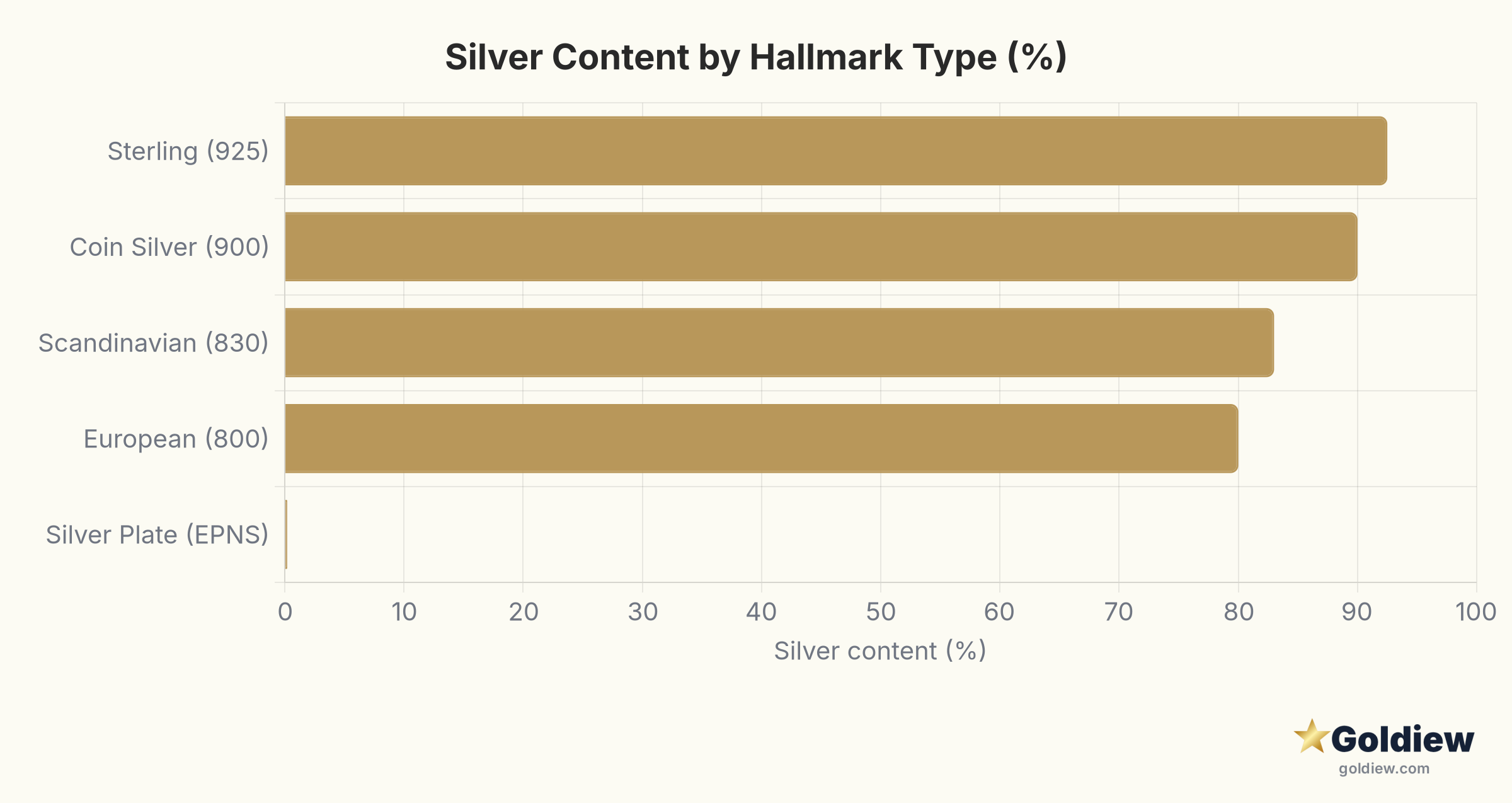
The fineness stamped on a piece determines exactly how much of its weight is recoverable silver. Here is what each major marking category means in practical terms: Markings outside standard US and British patterns, including European variants, are decoded in the Gold and Silver Hallmarks and Stamps Decoder.
| Mark | Silver content | Common origin | Melt value? |
|---|---|---|---|
| 925 / Sterling / Ster | 92.5% | US, UK, Canada, international | Yes |
| 900 / Coin | 90% | Pre-1920 US flatware; US silver coins | Yes |
| 830 | 83% | Scandinavian (Norway, Sweden, Denmark) | Yes |
| 800 | 80% | Germany, Austria, Eastern Europe | Yes |
| EPNS / EP / A1 | Trace (microns of silver over base metal) | Mass-market tableware, global | No |
| Quadruple Plate | Slightly heavier plate deposit; still trace | Victorian and Edwardian dining sets | No |

Silver coins use a different calculation. If you have pre-1965 US dimes, quarters, or half-dollars mixed in with your flatware, those carry 90% silver content and are valued differently. See the 90% silver coins value guide for coin-specific melt math.
Step 2: Secondary tests when the mark is worn or missing
Marks on heavily used or cleaned pieces can wear to near-illegibility. Three secondary tests help in those situations. None replaces a clear mark reading, but together they can give you a probabilistic answer.
Weight and density
Sterling is dense. Hold a spoon and compare it to modern stainless steel flatware of similar size. Sterling feels heavier and more solid. Silver plate over nickel silver can also feel substantial, so weight alone does not decide the question. Use it as one input among several.
Sound test
Hold a piece lightly by the tip and tap it against a hard surface. Sterling produces a clear, sustained ring. Silver plate over a base metal returns a flatter, shorter sound. This works better on bowls and pitchers than flatware. A clear ring is a positive indicator; a dull thud suggests plate.
Magnet test
Silver is non-magnetic. Hold a neodymium magnet near the piece. Strong attraction means iron or steel in the base, confirming it is not sterling. However, most silver plate uses nickel silver (a copper-nickel-zinc alloy), which is also non-magnetic. A non-response does not confirm sterling. Use this test only to rule out iron-based or tin base metals.
If a mark is completely unreadable on a potentially high-value piece, a professional acid test ($10 kit, available from jewelry supply retailers) or an XRF (X-ray fluorescence) analysis at a jeweler or refiner provides a definitive reading without damaging the piece.
The weighted-sterling trap: when your scale lies to you
Scale weight and silver weight are not the same thing for these two categories
Candlesticks and knife handle sets are legitimately marked sterling. They also weigh significantly more than their actual silver content. The gap between what your kitchen scale reads and what a refiner will pay for is one of the most common surprises in estate silver.
Sterling candlesticks: Most sterling candlesticks have hollow shells. Manufacturers fill them with pitch (a tar-based compound), plaster, or cement to provide the stability a hollow silver shell cannot offer on its own. A pair of sterling candlesticks weighing 900 grams total on your scale might contain 180 to 280 grams of sterling metal. The filler is inert for melt purposes. A refiner either weighs the shell after core removal or applies a standard deduction based on piece type.
Sterling knife handles: Most sterling place-setting knives have sterling handles and stainless steel blades. The blade contains no silver. Beyond that, the handle itself is often hollow where the blade tang fits, sometimes reinforced with an iron or steel rod. You’re pricing the silver in the handle, not the combined weight of handle and blade. A set of 12 sterling-handled knives weighing 900 grams total might contain 300 to 450 grams of recoverable sterling.
How to identify weighted pieces before you take them to a buyer:
- Check the base of a candlestick for a visible seam where the fill was introduced.
- Shake the piece gently near your ear. A rattle often indicates loose or deteriorated filler.
- Look for the word “Weighted” or the abbreviation “W” or “W.S.” (Weighted Sterling) stamped alongside the hallmark. Disclosure varies by manufacturer and era.
- For knives, separate handle weight from blade weight by checking the joint at the bolster.
For other sterling categories (flatware, trays, tea sets, water pitchers, serving bowls), gross scale weight is a reasonable starting point for melt calculations. The silver value calculator accepts gross weight and purity and applies the correct math. For candlesticks and knife sets, present any buyer estimate as approximate pending refiner verification.
When silver plate actually has resale value
No electroplated piece has melt value. Silver plate as a category is worth zero to a refiner. That said, certain plated pieces carry real secondary-market value as tableware, collectibles, or decorative objects. Knowing which ones saves you from discarding or underpricing them. Gold over sterling, called gold vermeil, still has base silver value; what is vermeil explains how buyers assess it.
Victorian and Edwardian holloware by named manufacturers: High-quality EPNS tea services, serving trays, tureens, and epergnes made by Elkington and Company, Mappin and Webb, Rogers Bros., William Hutton, and similar major platers from the 1860s through 1920s sell to antique dealers, Etsy resellers, and period tableware collectors for $50 to $400 depending on condition, pattern, and completeness. The market is not refiners. It is decorators, collectors, and hospitality buyers.
Condition matters heavily: “Bleeding” (copper or nickel showing through worn plating, typically at high-contact points like the back of a spoon bowl or fork tines) substantially reduces the collector value of plated pieces. Intact plating with minimal wear commands the full secondary-market range. Badly worn plate is genuinely worth very little.
Maker’s marks on plate: Some major platers stamped their marks clearly. Rogers Bros., Reed and Barton (on their plated lines), and International Silver Company pieces in complete pattern sets sometimes sell on Replacements.com or eBay at prices that reflect pattern demand, not metal content. Search the pattern name and maker on Replacements.com to assess current pricing before consigning or listing.
Sheffield Plate specifically: Pre-1840 Sheffield Plate with verifiable maker’s marks sells through specialist dealers and auction houses as a collector category. Its value comes from rarity and historical significance, not silver content. If you believe a piece is genuine early Sheffield Plate, have it assessed by a dealer in antique silver before pricing it as tableware.
Calculating what your sterling is worth
The melt value formula
For a sterling piece with a known gross weight:
Melt value = (weight in grams ÷ 31.1) × 0.925 × current spot price per troy ounceFor 800-grade European silver, replace 0.925 with 0.80. For coin silver (900), use 0.90. The Goldiew silver value calculator handles this automatically with live spot pricing.
Melt value is not what buyers pay. Most silver buyers operate on a spread. Expect offers of 70% to 90% of calculated melt value depending on buyer type, piece category, and market conditions. Getting competitive offers matters more than most sellers realize. A single offer on a collection with $800 melt value could range from $520 to $720. That $200 difference is real money. The where to sell silver guide covers which buyer types return most of that melt value.
Buyer types and what to expect from each:
- Silver refiners and bullion dealers: Highest melt-to-offer ratio (75 to 90%), slowest process, often require shipping or drop-off.
- Estate buyers and silver specialists: May pay premium over melt for complete sets in desirable patterns. Most consistent for large collections.
- Coin dealers: Routinely buy sterling alongside coin silver. Competitive on flatware, less so on holloware.
- Pawnshops: Fastest transaction, typically lowest payout (50 to 70% of melt).
- Online auction (eBay, Heritage): Highest ceiling for rare or collectible pieces, most effort and time required.
For a full breakdown of selling channels, fees, and what documentation you need before selling inherited silver, see the Goldiew sterling silver flatware selling guide.
Get competitive offers from verified silver buyers
Post one free request on Goldiew’s seller platform and receive sealed offers from up to 15 verified precious metals buyers. Your contact details stay private until you accept an offer. There is no brokerage fee and no obligation. You can also search verified dealers and buyers near you through the Goldiew marketplace, where buyers list their current buying terms by metal type and piece category.
Frequently asked questions
How do I read a hallmark stamp that’s worn smooth?
Try a 10x loupe with a bright sidelight: position a flashlight or phone light at a low angle so the stamped impression catches shadow. If the mark is still unreadable, a smartphone macro lens attachment ($10 to $20 online) often reveals detail that naked-eye inspection misses. For pieces that might be worth $100 or more in silver, a professional acid test or XRF analysis at a jeweler or refiner gives a definitive result in minutes. Most reputable buyers will test before making an offer anyway.
Can silver plate be mistaken for sterling by a professional buyer?
Not when proper testing is used. A professional jeweler or silver buyer uses acid testing or X-ray fluorescence (XRF) analysis, both of which give exact silver content readings independently of visual appearance or marks. The naked eye or a magnet can mislead. Acid and XRF cannot. If a buyer is offering you a price without any visible testing on unmarked pieces, ask how they determined the metal content before accepting.
What does “quadruple plate” actually mean, and is it worth more?
Quadruple plate means the electroplating process ran four passes instead of the standard one or two, producing a thicker silver layer. The piece is more durable and resists wear longer than standard single-plate items. It is still electroplate. It has no meaningful melt value regardless of deposit thickness. In good condition, quadruple plate holloware often commands a modest premium on the tableware secondary market over thin-plate equivalents, but the category difference from sterling remains absolute.
My piece is stamped “800.” Is that sterling?
No, strictly speaking. Sterling is 92.5% silver. A piece marked 800 contains 80% silver, which is a fineness standard common in Germany, Austria, and parts of Scandinavia and Eastern Europe. It is genuine silver with real melt value. Calculate at 80% rather than 92.5%. Some buyers apply a small discount relative to sterling on European 800 pieces since refining costs are similar but silver yield per gram is lower. The piece is not plate. It is silver at a lower fineness than US or British sterling.
Can I test for sterling at home without a jeweler?
Yes, with caveats. Mark reading (described above) is reliable for well-stamped pieces and costs nothing. Acid test kits, typically nitric acid on a touchstone, sell online for around $10 and work at home with care. The acid is caustic; follow kit instructions exactly. The test leaves a faint scratch on the piece and a color reaction on the stone that indicates silver content range. For important or high-value pieces, XRF analysis at a jeweler is non-destructive and completely accurate. Most local jewelry stores will test a piece for a small fee or free as a courtesy.
What is the difference between sterling and fine silver?
Fine silver is 99.9% pure silver, marked “.999” or “Fine Silver.” Sterling is 92.5% silver with copper (and sometimes other metals) added for hardness. Pure silver is too soft for flatware and most functional objects. You encounter it in bullion bars, some coin blanks, and specialty jewelry. For estate purposes, fine silver returns more per gram than sterling since each gram carries more recoverable metal. Most inherited household flatware and holloware is sterling, not fine silver.
Is weighted sterling candlesticks worth selling to a refiner?
Usually yes, but establish the actual sterling weight before accepting any offer. Ask the buyer to quote on the sterling shell weight, not the total piece weight. Weighted sterling candlesticks typically contain 100 to 300 grams of sterling per stick, depending on size and manufacturer. At current silver prices, a pair with 200 grams of total sterling can be worth $40 to $120 in melt. Some buyers quote on gross weight at a suppressed per-gram rate; others quote on net silver weight at a fair rate. Get both numbers and compare.
What about “nickel silver” or “German silver” pieces in the cabinet?
Nickel silver (also called German silver or white metal) contains no silver at all. It is an alloy of copper, nickel, and zinc that resembles silver in color. Some pieces marked “German Silver,” “Nickel Silver,” or “Alpaka” are base alloy with no precious metal content. Others in this finish are electroplated with silver over the nickel silver base, making them EPNS. Neither category has melt value. Nickel silver pieces sometimes have decorative or antique value to collectors of period household items, but they are not precious metal assets.
Sources
- FTC Jewelry Guides, 16 CFR Part 23: Federal Trade Commission fineness standards and labeling requirements for silver articles sold in the US market
- London Assay Office: UK Hallmarking System: official explanation of the lion passant, date letters, assay office marks, and sponsor’s marks on British silver
- British and Irish Association of Jewellers: Hallmarking: fineness standards, compulsory hallmark elements, and sponsor mark registration
- ASTM B700: Standard Specification for Electrodeposited Coatings of Silver. Industry standard defining silver deposit thickness in microns for electroplated articles (single, double, triple, quadruple plate classifications).
- Replacements.com: pattern identification database and secondary-market pricing reference for sterling and silver plate flatware patterns
- Goldiew buyer and refiner network input: weighted sterling deductions, buyer spread ranges, and holloware valuation practices based on verified US buyer data